
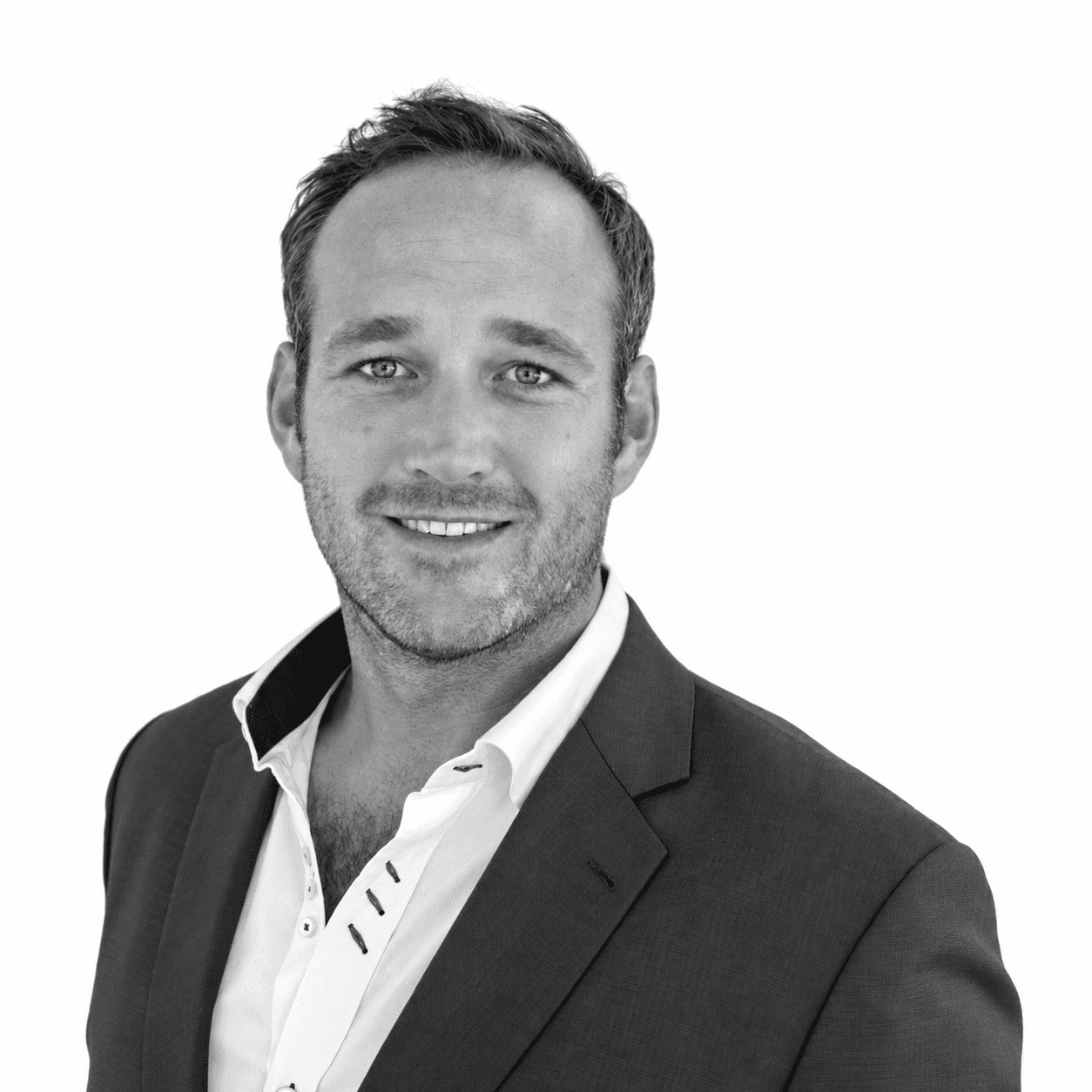
 James Bergl

An AI recruitment agency in Australia should define the role by what it owns, screen for systems the candidate has actually shipped, and bring you three to five people who fit your stack, stage and budget. Database size is not the differentiator. Role calibration is.
The pressure is real. Australian job postings requiring AI skills more than doubled from about 20,000 in 2024 to 41,000 in 2025, and AI-skilled workers now earn a 62% wage premium, according to PwC's 2026 AI Jobs Barometer. Expect to pay A$125,000 to A$220,000+ base for an AI engineer, and plan for a placement fee on top.
One clarification first, because the term gets used both ways. This guide is about recruiting AI talent: AI engineers, ML engineers, MLOps, data scientists and AI leaders. It is not about recruitment agencies that use AI tools to screen CVs. If you are hiring the people who build and ship AI, you are in the right place, and this is the work our AI recruitment agency in Australia does every day.
You briefed an agency for an AI engineer. What came back was a mix of prompt engineers, data scientists and a couple of software developers with a recent PyTorch project on their CV. That is the most common failure I see in AI hiring, and it almost always starts before the first CV is sent.
I spent 16 years in software sales and leadership before I started recruiting, so I have sat on the hiring side of the table. Now I lead Bluebird's APAC practice. In this guide I cover how to define AI roles, what they cost in Australia in 2026, what an AI recruiter should do before sending candidates, and a hiring process that does not waste six weeks.
What does an AI recruitment agency actually do?
A specialist AI recruitment agency finds, assesses and places people who build, deploy and commercialise AI products. A credible one earns its fee in the scoping phase, not the sourcing phase. It pressure-tests the role, maps where the right candidates sit in Australia, and screens for production evidence rather than keywords.
Generic tech recruitment is built for roles where the title reliably describes the work. AI hiring in Australia is not that market. The same title can describe someone running production inference pipelines at a fintech and someone running exploratory notebooks at a research lab. A keyword-based shortlist will not separate them.
The strongest AI candidates are also passive. They are employed, well paid and selective about what they answer. An AI recruiter who posts ads and waits is not a specialist, whatever the pitch says.
AI roles in Australia: what each one actually owns
Before a search starts, define the role by what it owns in its first 90 days, not what it is called.

| Role | What they actually own | Common hiring mistake | Better screening signal |
|---|---|---|---|
| AI engineer | Integrating AI models into production systems: API design, inference pipelines, latency and cost | Confusing it with an ML engineer or senior software engineer | Shipped AI-powered features serving real users |
| ML engineer | Building, training and deploying models; data pipelines, monitoring | Accepting data scientists with no deployment ownership | Reproducible training pipelines, monitoring, rollback decisions |
| Data scientist | Experiment design, statistical modelling, insight | Assuming they will own deployment or infrastructure | Decision quality and business impact framing |
| MLOps engineer | Infrastructure for ML at scale: CI/CD for models, feature stores, versioning | Treating it as a DevOps variant | Platform reliability, deployment cadence, reproducibility |
| AI product manager | Strategy and roadmap for AI features | Hiring a PM without AI fluency | Has scoped AI features with engineering, not just documented them |
| Founding AI hire | Breadth across research, engineering and pragmatic build-or-buy calls | Hiring too narrowly or too academically | Shipped systems with limited resources |
The role title is the starting point. What the hire owns in their first 90 days is the brief.
If you are making your first technical hires, our founding technical team guide covers sequencing, and our guide to software recruitment for technical hires in Australia covers the engineering roles around your AI team.
AI hiring does not stop at engineering
Once the product works, you need people who can sell and deploy it. AI solutions engineers, GTM engineers and AI sales leaders are now some of the hardest briefs I see, because they need technical credibility and commercial instinct in one person. Those searches sit with our GTM recruitment team, and our guide to sales engineer recruitment covers how to assess that hybrid profile. If you need engineers who deploy AI inside customer environments, see how we hire forward deployed engineers.
The AI hiring market in Australia in 2026
Demand for AI skills in Australia has moved from steady growth to a step change. These are the figures from PwC's June 2026 release:
| Indicator (Australia) | Figure | What it means for hiring |
|---|---|---|
| Job postings requiring AI skills | About 20,000 in 2024 to 41,000 in 2025 | More than double the competition for the same people |
| Wage premium for AI-skilled workers | 62%, up from 57% the year before | Below-market offers get declined at the first call |
| Industries paying the highest premiums | Technology, media and telecoms; manufacturing; financial services | SaaS companies compete with banks and industrials for the same pool |
Source: PwC 2026 AI Jobs Barometer
What I see on the ground matches that. Strong candidates field several approaches at once. A process that takes eight to ten weeks from brief to offer loses people to employers who move in three or four. Speed matters, but only after the role is properly defined. Moving fast on a poorly scoped role just gets you to the wrong outcome sooner.
Talent is concentrated in Sydney and Melbourne, with smaller, sector-specific clusters in Brisbane, Perth and Canberra. For most specialist AI roles, the candidate pool is far shallower than for general software engineering.
How much does it cost to hire an AI engineer in Australia?
Expect A$125,000 to A$220,000+ base for an AI engineer and A$115,000 to A$225,000+ for an ML engineer in 2026, before superannuation. Where a candidate sits in that range depends mostly on whether they have owned production systems.
| Role | Base salary range (A$, excl. super) |
|---|---|
| Data scientist | 100,000 to 185,000+ |
| ML engineer | 115,000 to 225,000+ |
| AI engineer | 125,000 to 220,000+ |
| MLOps engineer | 130,000 to 210,000+ |
City differences are smaller than most people expect. For ML engineers, Indeed data from May 2026 puts the Melbourne average at A$150,467 and Sydney at A$148,464, so do not assume Melbourne is the cheaper market for AI talent.
Here is the budget guidance I give clients for the two most common scenarios:
| Scenario | Role | Base budget (A$) |
|---|---|---|
| First ML hire with senior scope | Senior ML engineer | 155,000 to 185,000 |
| Scale-up platform team | ML engineer | 145,000 to 195,000 |
| Scale-up platform team | MLOps engineer | 130,000 to 210,000 |
| Scale-up platform team | Senior or staff engineer | 185,000 to 225,000+ |
The salary is not the whole cost. On a A$145,000 base, a mid-level ML engineer's first year typically lands between A$203,650 and A$223,750 once you add 12% super, a 10 to 15% bonus, tooling, training and a 15 to 20% recruiter fee. Our machine learning engineer salary guide breaks that down line by line, and the SaaS salary guide 2026 covers the wider tech and GTM market.
The most common budget mistake I see: a company expects a senior AI engineer at A$140,000 and finds the market is A$30,000 to A$50,000 higher for genuine production ownership. Surface that at the brief, not after three failed shortlists.
How much does an AI recruitment agency cost in Australia?
Most AI recruitment agencies charge a placement fee calculated as a percentage of first-year base salary, typically 15 to 20% for specialist technical roles. What matters as much as the rate is when you pay and what the guarantee covers. This is how we structure AI searches at Bluebird:
| Search model | Best for | How you pay | Replacement guarantee |
|---|---|---|---|
| Contingency | Clearly defined AI engineer, ML engineer and data science roles | No upfront fee; fee due on start date | 60 days |
| Retained | Scarce profiles where the pool is shallow and scoping matters | 25% upfront, balance on start date, with a 15% fee reduction | 90 days |
| Executive search | Head of AI, VP Machine Learning, Chief AI Officer | One third on engagement, one third on shortlist, one third on start date | 6 months |
For niche AI roles, I usually recommend retained. It buys exclusivity, deeper market mapping and weekly reporting, and it aligns the search with quality rather than speed. You can compare the models on our recruitment services page.
Why keyword shortlists fail in AI hiring
Keyword matching produces a shortlist that looks convincing and falls apart in interview. These are the failure modes I see most often:
- Model-building without deployment. The candidate has trained models but never owned putting one into a live system.
- Notebooks, not production. Jupyter work and production APIs are different disciplines, and many CVs blur the line.
- Inflated GenAI labels. Calling any project that touched an LLM API "AI engineering" has inflated a large part of the pool since 2023.
- No stakeholder translation. Senior AI hires in SaaS must explain trade-offs to product and commercial leaders. CVs rarely show this.
- Stack mismatch. A strong AWS-native ML engineer may struggle in a GCP or on-premises environment. Few generic recruiters ask.
- Academic framing without commercial outcome. PhDs can make excellent founding AI hires, or poor fits if the role needs shipping over publishing.
- Title inflation on both sides. Companies advertise an "AI Engineer" when they need a data analyst, and candidates call scripting a few models ML engineering.
What a specialist AI recruiter should do before sending candidates
Pressure-test the scope, budget and reporting line
A founding AI hire at a 30-person SaaS company needs breadth: comfort with ambiguity, work across research and production, and judgment about when to build and when to integrate. A scale-stage AI role at a 200-person company may need depth instead: MLOps rigour, a domain specialism or a specific stack.
Salary, title and scope drift out of alignment more often in AI hiring than anywhere else I recruit. A good recruiter tells you at the brief stage, before any outreach.
Map the Australian market before outreach starts
A specialist should be able to tell you, before searching, roughly how many people in Sydney and Melbourne have shipped the kind of system you need, where they work now, and what would move them. If you are hiring across the region, our SaaS Down Under guide and APAC hiring checklist for SaaS companies entering Australia cover the regional context.
Assess for shipped systems, not model familiarity
A credible AI recruiter should probe for:
- Production deployment: has the candidate taken a model from development to a live system serving real users or decisions?
- Data quality judgment: can they describe working through noisy labels, missing data or distribution shift?
- Monitoring and iteration: do they think about what happens after deployment?
- Cross-functional work: have they translated model trade-offs for product or commercial stakeholders?
- Business impact: can they describe what changed because of their work?
None of this needs a formal technical test. A structured conversation with the right questions gets there.
How to hire AI talent in Australia without wasting six weeks
Start with a scorecard, not a job ad
A job ad attracts applicants. A scorecard defines success. Build it before you brief anyone:
- The business problem this role exists to solve
- The first 90-day deliverable that signals a successful hire
- The data and stack environment: cloud platform, frameworks, data infrastructure
- Must-have production experience versus nice-to-have familiarity
- Who the role works with: product, data engineering or research
- A compensation range grounded in current market data
- Location, hybrid and remote expectations
Match the interview loop to the role
| Role | What to assess |
|---|---|
| AI engineer | Implementation trade-offs, integration design, production latency, cost and reliability problems they have solved |
| ML engineer | Model deployment, pipeline design, monitoring, and what they do when performance degrades in production |
| Data scientist | Experiment design, statistical reasoning, and how they explain uncertainty to non-technical stakeholders |
| MLOps engineer | Platform reliability, reproducibility, CI/CD for models, feature stores |
A short work-sample discussion tied to your real stack predicts more than a generic coding test. Treat it as a two-way evaluation, because strong candidates are assessing you at the same time.
Keep the shortlist narrow and move fast
For specialist AI roles, three to five pre-screened candidates beat ten loosely matched ones. Volume is a sign the screening bar was low.
Once interviews start, give feedback within 24 to 48 hours. Have the conversation about competing offers and decision timelines before you make the offer, not after. Once the brief is agreed, our average time to a first strong introduction is about seven working days.
Questions to ask an AI recruitment agency before signing terms
- How do you tell an AI engineer from an ML engineer for a role like ours, and how does that change where you source?
- What evidence do you use to judge real production experience versus prototype work?
- How many candidates do you expect on a strong shortlist, and why?
- How do you calibrate our salary expectation against the current Australian market?
- What goes into your candidate notes beyond a CV summary?
- Have you placed AI or ML engineers at a company at our stage? What were the hardest trade-offs?
- Do you recommend retained or contingency for this role, and what does your guarantee cover?
- How do you handle competing offers during the close?
Vague answers to questions 1, 2 and 4 are the clearest early signal that a keyword-driven shortlist is coming.
When Bluebird is the right AI recruiter, and when it is not
Bluebird is an operator-led SaaS and AI recruitment agency. Our team comes from SaaS operating roles, not traditional recruitment, so the first conversation is about what the role owns, the data environment, the product stage and what a good first six months looks like. We have made more than 200 placements and hold a 5.0 rating across 48 Google reviews on our testimonials page.
We are a good fit for:
- SaaS and AI companies hiring AI engineers, ML engineers, MLOps, data scientists or founding AI talent in Australia or across APAC
- Teams where role definition and shortlist quality matter more than CV volume
- Leaders who want a practitioner conversation, not a transactional one
We are not the right fit if you need a high-volume offshore team built fast, or if you judge a recruiter by how many CVs arrive in week one. If your internal team already has deep AI networks, read our comparison of in-house recruitment vs an agency first.
If you want to brief me on an AI or machine learning role, start with our AI recruitment team. I will tell you honestly whether the brief and budget are ready before we search.
AI recruitment FAQs
What does an AI recruitment agency in Australia do?
A specialist AI recruitment agency defines AI roles by what they own, maps the Australian talent market, and screens candidates for production systems they have shipped. It places AI engineers, ML engineers, MLOps engineers, data scientists and AI leaders, rather than using AI tools to screen applicants.
How much does an AI engineer cost in Australia?
AI engineers typically earn A$125,000 to A$220,000+ base in 2026, excluding superannuation. Senior engineers with production ownership sit at the top of the range. Add super, bonus, tooling and any recruiter fee for the true first-year cost.
How much does an AI recruitment agency charge?
Most charge 15 to 20% of first-year base salary for specialist technical roles. Contingency is paid on start date, retained takes part of the fee upfront, and executive search is paid in milestones. Guarantees usually run from 60 days to six months.
Should I hire an AI engineer or an ML engineer first?
Hire an AI engineer if you need to integrate AI capabilities into your product. Hire an ML engineer if you need to build, train and maintain models and their pipelines. Many early-stage SaaS companies need the AI engineer first.
How hard is it to hire AI talent in Australia?
Very competitive. PwC found Australian job postings requiring AI skills more than doubled to 41,000 in 2025, and AI-skilled workers command a 62% wage premium. The pool of people with real production experience has not grown at the same pace.
Are AI engineer salaries higher in Sydney or Melbourne?
They are close. For ML engineers, May 2026 Indeed data puts the Melbourne average at A$150,467 and Sydney at A$148,464. Specialism and production experience move salaries far more than city.
How many candidates should be on an AI shortlist?
Three to five well-screened candidates. A shortlist of eight or more in a specialist AI search almost always includes padding.
Is retained search better than contingency for AI roles?
For scarce profiles where the pool is shallow and scoping matters, retained usually produces better outcomes. It funds market mapping and aligns the recruiter with quality rather than speed.
Can an internal recruiter handle AI hiring?
Sometimes, if they have deep AI domain knowledge and active networks. Most generalist internal recruiters benefit from a specialist AI recruiter for highly technical or scarce-profile searches.
How quickly should I move on a strong AI candidate?
Give feedback within 24 to 48 hours of each stage and keep the offer process tight. Strong AI candidates in Australia are usually talking to more than one employer.
Your next move
- The role is unclear. Fix the scorecard before you brief anyone. An unclear brief returns an unclear shortlist.
- The budget is unproven. Check it against our machine learning engineer salary guide before you go to market.
- Your last shortlist was generic. Change how you evaluate recruiters before you post the role again. Ask about production screening and shortlist size.
- You are scaling a technical team. Our tech scale-up guide covers process structure for the next stage.
When you are ready, talk to our AI recruitment team about the role. Prefer email? Contact us here.
About the author: James Bergl is Managing Partner, APAC at Bluebird. After 16 years in software sales and leadership, he helps SaaS and AI companies build AI, technical and GTM teams across Australia and APAC.