
Account Executive Hiring in Australia What the Best Shortlists Have in Common
Hiring account executives in a SaaS environment is one of the highest-stakes decisions a revenue leader makes. Get it right and you have a repeatable revenue contributor within 90 days. Get it wrong and you are looking at six months of lost pipeline, a disrupted team, and a search that starts from scratch.
The Australian SaaS market is generating sustained demand for AE talent. Industry forecasts from IDC, Gartner, and Statista point to high single-digit to low-mid teens annual growth for Australian SaaS through the second half of the decade, which means competition for credible, experienced account executives is not easing. At the same time, RepVue data updated May 2026 shows that only 39.8% of account executives in Australia hit quota in the last 12 months. That figure reframes the entire hiring problem: the candidate pool is large, but the pool of genuinely high performers is far smaller than most shortlists reflect.
This article breaks down what the best AE shortlists actually share, how to pressure-test candidates in interviews, and where most AE hiring processes break down before an offer is even made.
Why Account Executive Hiring Is a Different Brief
Account executive hiring is not an extension of a general sales brief. The role sits at the intersection of commercial ownership, pipeline generation, and enterprise relationship management. When you hire an AE, you are hiring someone who will carry a direct quota, manage complex multi-stakeholder deals, and often represent your brand in markets you are trying to establish or grow.
That specificity changes what a strong brief looks like.
Quota Ownership Changes the Evaluation Frame
Unlike a sales development representative whose output is measured in meetings booked, an AE is measured on closed revenue. Annual contract value, average deal size, quota attainment percentage, and ramp timeline are the metrics that matter. A brief that does not define these clearly before the search starts will produce shortlists full of candidates who look right on paper but are misaligned in practice.
For most SaaS companies entering Australia or scaling an existing team, the AE role also carries go-to-market responsibility that SDRs and customer success managers do not: owning territory, building pipeline from near-zero, and closing without the support infrastructure that exists in more mature markets. That context needs to be reflected in both the job design and the candidate criteria.
Role Scope in the Australian Market
The Australian SaaS talent market is smaller and more concentrated than US or European equivalents. Sydney and Melbourne hold the majority of enterprise SaaS sales talent, with a growing base in Brisbane. For international SaaS companies entering APAC through an Australian hub, AEs often carry broader responsibilities than they would in a larger market: managing both new logo acquisition and expansion within existing accounts, covering longer sales cycles than expected, and navigating buying processes shaped by local procurement culture.
Building this context into the brief is not optional. It directly affects which candidates are genuinely qualified and which ones would struggle within three months of starting.
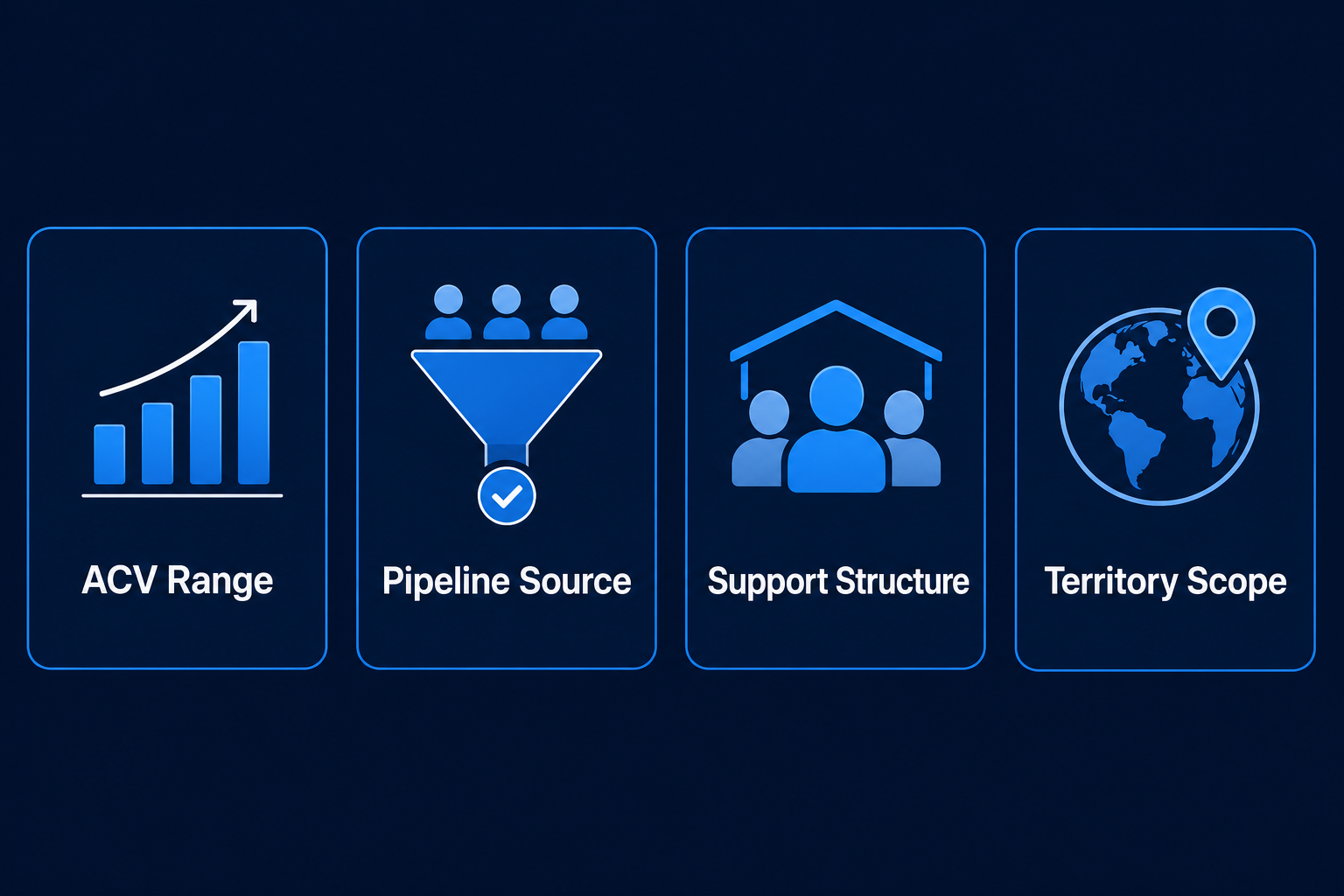
| Role Context Signal | What It Tells You |
|---|---|
| ACV range and deal complexity | Whether the candidate's prior environment matches yours |
| Inbound-to-outbound ratio | Whether they can generate pipeline or only convert warm leads |
| Support structure available | Whether they can operate with limited SDR or SE support |
| Territory scope | Whether they have experience in multi-state or APAC remits |
What Top Shortlists Usually Share
After working through a significant number of AE searches across the Australian SaaS market, certain patterns hold across the strongest shortlists. These are not aesthetic similarities: they are functional ones.
Evidence of Repeatability, Not Just One Good Year
The most reliable signal in an AE shortlist is consistent quota performance across at least two different environments. One strong year can be explained by territory luck, a hot market, strong inbound support, or an unusually competitive product. Two or three years of above-quota performance across different company stages, different ACVs, or different verticals is a much harder signal to dismiss.
When reviewing candidate history, look specifically for performance across varied sales cycles and note whether the candidate joined during a growth phase or a stabilisation phase. Both tell you something about how they operate under different conditions.
Specificity in Their Numbers
Strong candidates can tell you their quota in each role, their attainment percentage, their average deal size, and their typical sales cycle length. Candidates who cannot recall these numbers precisely, or who qualify every figure with 'it depended on the quarter,' are often signalling that their track record is less consistent than it appears.
This is not about interrogating candidates unfairly. It is about recognising that top account executives in SaaS tend to track their own metrics carefully, because their compensation and their career depend on them.
SaaS Motion Alignment
The sales motion matters as much as the industry. A candidate with strong transactional SaaS experience at a high-volume SMB company will struggle in an enterprise AE role with 6-month sales cycles and complex procurement. A candidate who has only ever sold with a full SDR team and strong inbound flow will need significant adjustment in a new-market, outbound-led role.
The best shortlists contain candidates whose prior motion matches the motion you need, not just their industry experience. Technical literacy is now a baseline expectation for AEs selling complex SaaS, with candidates who can discuss total cost of ownership and integration complexity commanding stronger positions in the market.
How to Test AE Readiness in Interviews
Most AE interview processes test for the wrong things. Generic competency questions and a casual walkthrough of the resume will not separate a high performer from a polished presenter. Practical evaluation requires deliberate design.
Deal Deconstruction as a Core Exercise
Ask the candidate to walk you through a deal they are proud of, from the initial qualification call through to close. The goal is not to hear a polished success story. The goal is to understand how they think about deals: how they qualified early, how they navigated objections, how they managed the procurement process, and what they would do differently.
Pay attention to specificity. A strong AE will remember the stakeholders, the commercial objections, the timeline pressures, and the actual close mechanism. A weaker candidate will give you a summary that sounds impressive but contains no detail you could verify or probe.
Pipeline Questions That Reveal Self-Sufficiency
In the Australian SaaS market, particularly for companies building their first or second local AE team, self-sufficiency is critical. Ask directly how the candidate builds their own pipeline: which channels they use, how they approach territory planning, what their prospecting cadence looks like, and how they have responded when inbound dried up.
Candidates who have only operated with strong SDR support will struggle to answer these questions with the same confidence as those who have built pipeline from scratch. That difference is worth knowing before the offer stage.
A Practical Sales Scenario
A short, structured role-play or written scenario is one of the most effective tools in an AE interview process. Present the candidate with a realistic objection or deal scenario relevant to your product and market, and give them 10 to 15 minutes to respond. It does not need to be theatrical. The goal is to see how they handle pressure, structure their thinking, and communicate value in context.
When AE Hiring Goes Wrong
Most AE hiring mistakes follow recognisable patterns. Understanding them in advance will save a significant amount of time and cost.
Hiring on Pedigree Rather Than Evidence
A well-known brand name on a resume is not a substitute for demonstrated quota performance. Some of the strongest AE performers in the Australian market have come from lesser-known SaaS companies where they had to build pipeline and close without a famous logo doing half the selling. Some candidates from well-known companies have never had to do real outbound work in their careers.
Evaluate the evidence, not the brand association.
Skipping Reference Checks on Actual Managers
Reference calls with former colleagues are pleasant. Reference calls with former direct managers are informative. The specific questions matter too: ask about quota performance relative to their peer group, not just whether they hit quota. Ask about how they managed a difficult quarter. Ask whether the manager would re-hire them without hesitation.
Those answers will tell you more than the entire interview process in most cases.
Misaligned Compensation Structure
An AE who has always worked with uncapped commission and a strong variable component will be demotivated by a role with a high base and a modest commission structure. The reverse is also true: a candidate who values base salary security will struggle in a role where 50% of earnings are variable. Compensation misalignment is one of the most common early-exit causes in SaaS AE hiring, and it is entirely avoidable with a clear conversation during the process.
| Common Hiring Mistake | Why It Happens | How to Avoid It |
|---|---|---|
| Hiring on company pedigree | Strong brand names create cognitive shortcuts | Focus on specific performance data, not employer name |
| Weak reference checks | Process shortcuts under time pressure | Always speak to a direct manager, not just a peer |
| Misaligned sales motion | Brief lacks specificity on motion requirements | Define ACV, cycle, and outbound expectation upfront |
| Ignoring ramp expectations | Urgency to fill the role quickly | Build realistic ramp into the offer and onboarding plan |
How Bluebird Approaches AE Searches
At Bluebird, AE searches are built differently from the outset because the team running them comes from SaaS backgrounds rather than traditional recruitment. That distinction matters practically: the brief is written by people who have lived inside SaaS go-to-market motions, which means the qualification criteria are grounded in what actually predicts AE success, not what looks credible on a scorecard.
Every AE search starts with a detailed intake that goes well beyond the job description. That conversation covers ACV range, sales cycle length, the inbound-to-outbound mix, what the current team structure looks like, what the first 90 days of ramp realistically require, and where previous AE hires have fallen short. That context shapes the brief, the sourcing strategy, and the candidate evaluation criteria before a single outreach message is sent.
Bluebird's network is concentrated in the Australian and APAC SaaS market, which means candidates are assessed against a genuine understanding of the local talent landscape. Salary benchmarks, performance expectations, and candidate availability are evaluated in the context of what Sydney, Melbourne, and broader ANZ SaaS companies are actually seeing, not benchmarks imported from US or UK markets that do not translate directly.
Shortlists are built for quality, not volume. A shortlist of three to five well-qualified candidates with verified performance histories is more useful than a list of ten that requires a hiring manager to do the filtering work themselves. That approach also means faster time-to-hire when it counts, which matters in a market where the strongest account executives are typically fielding multiple conversations at once.
For companies running a structured AE search, particularly those entering Australia for the first time or rebuilding a team after turnover, a retained search model with Bluebird provides the accountability and focus that contingency arrangements rarely deliver on senior roles.
Frequently Asked Questions
What makes account executive hiring different from other sales roles in Australia? AEs carry direct quota responsibility and often own both new logo and expansion revenue, requiring more specific evaluation of performance history, sales motion fit, and self-sufficiency than other sales roles.
How long does a typical AE search take in the Australian SaaS market? A focused AE search with a well-defined brief typically takes 4 to 6 weeks from briefing to shortlist. Roles requiring niche vertical experience or senior seniority can run 6 to 10 weeks.
What quota attainment percentage should I expect from strong AE candidates in Australia? RepVue data from May 2026 shows only 39.8% of Australian AEs hit quota, making consistent multi-year attainment a genuine differentiator rather than a baseline expectation.
Should I use a retained or contingency model for an AE search? For senior or strategically important AE roles, retained search provides more focused effort and accountability. Contingency arrangements work better for more junior or high-volume hiring where speed is the primary variable.
What are the most common early exit reasons for new AE hires in SaaS? Misaligned compensation structure, unclear ramp expectations, and a mismatch between the candidate's prior sales motion and the actual role requirements account for the majority of early exits in SaaS AE hiring.